
How to be a Hero
EldaraHQ
Character sheet & GM dashboard for the Eldara pirate campaign – with live multiplayer, soundboard and house rules.

Self-hosted tools for tabletop RPGs – character sheets, game master dashboards and more.
8 tools
Character sheet & GM dashboard for the Eldara pirate campaign – with live multiplayer, soundboard and house rules.

Character sheet & GM dashboard with 13 themes, dice, soundboard and live multiplayer.
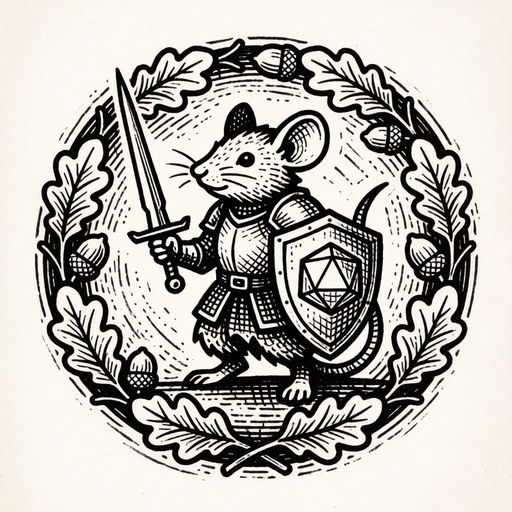
Free character sheet, GM dashboard and serverless multiplayer for Mausritter.
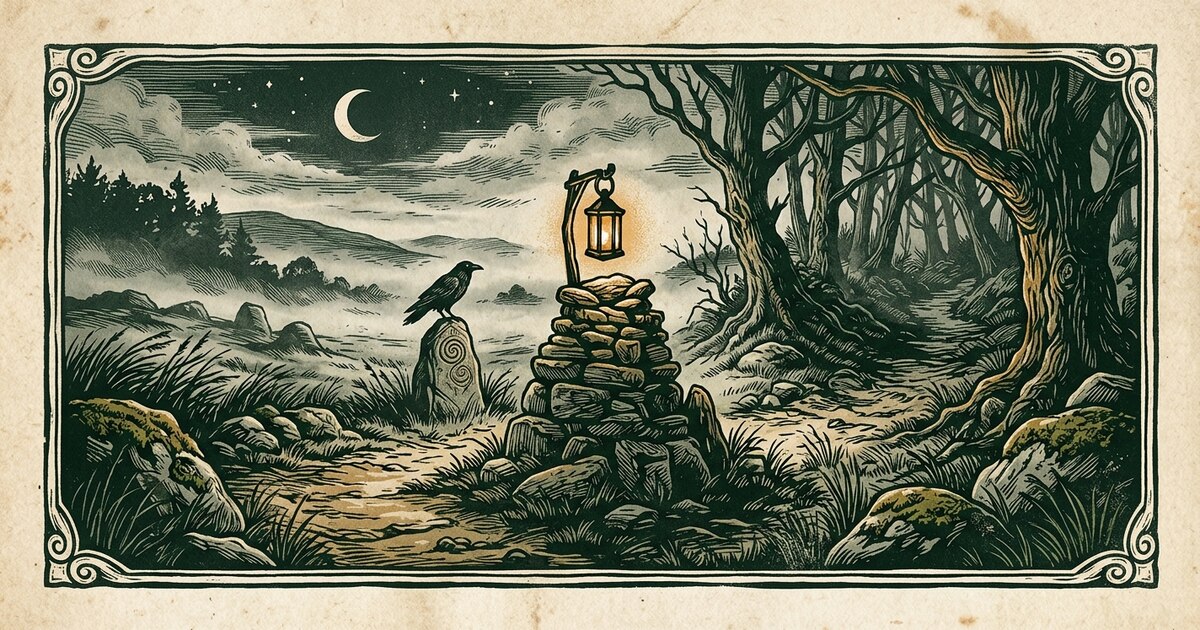
Free character sheet, Warden dashboard and serverless multiplayer for Cairn (2nd edition).
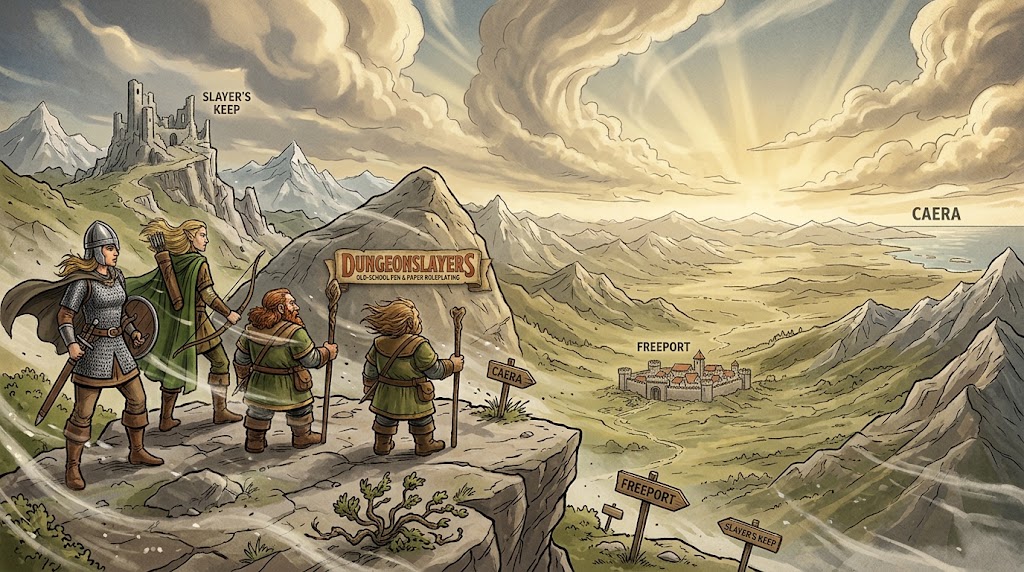
Character sheet with creation wizard, bestiary, combat tracker, battlemap and GM dashboard for Dungeonslayers 4.

Cinematic action roleplaying: rulebook, character sheet, map, dice and GM dashboard for the 2d6 Clash system with gun-fu and martial arts.
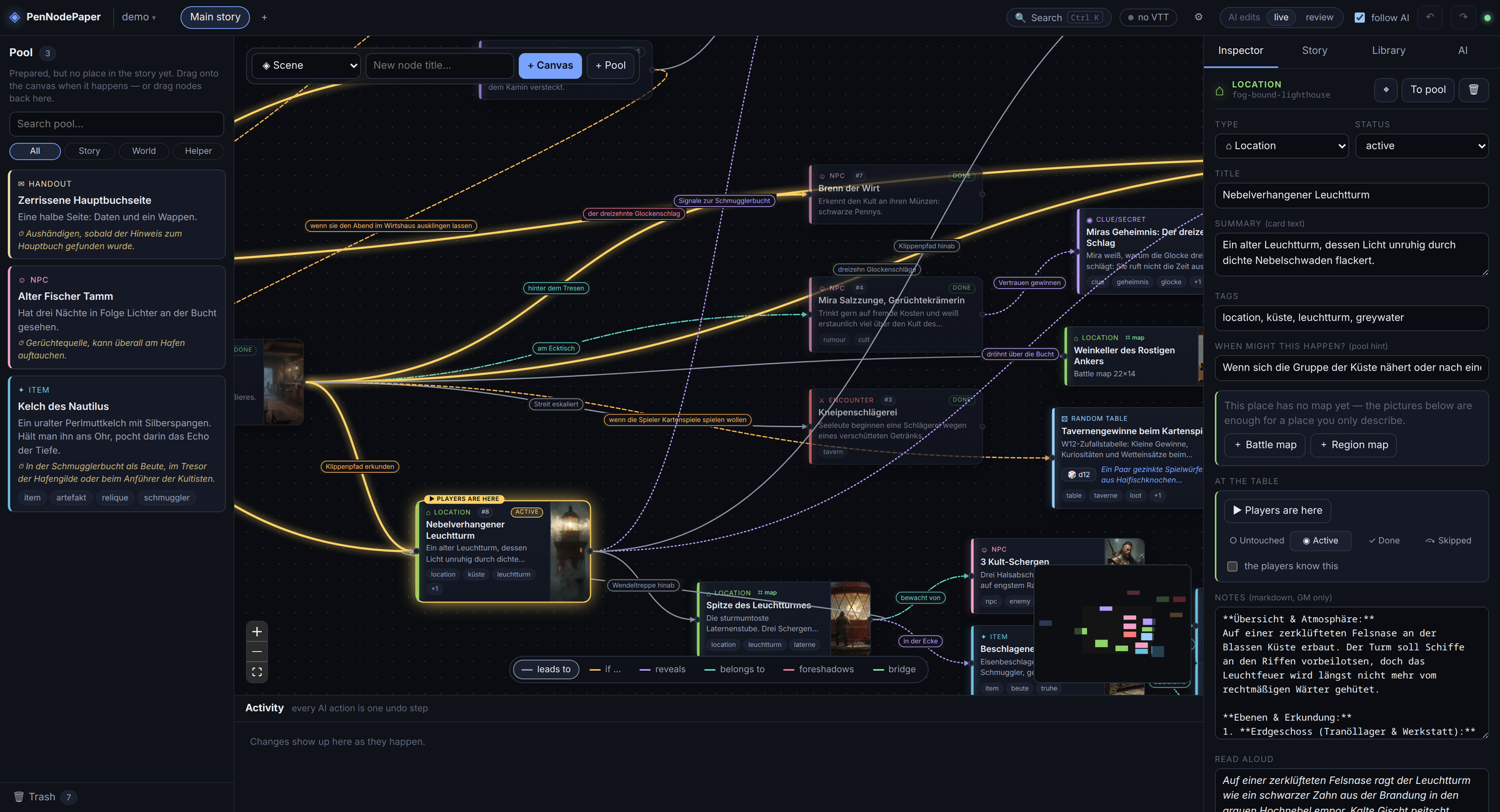
AI-assisted world and story builder on an infinite node canvas. Runs locally on your computer (Node 20+) and connects via bridge to KINETIK VTT, EldaraHQ and HeroHQ.
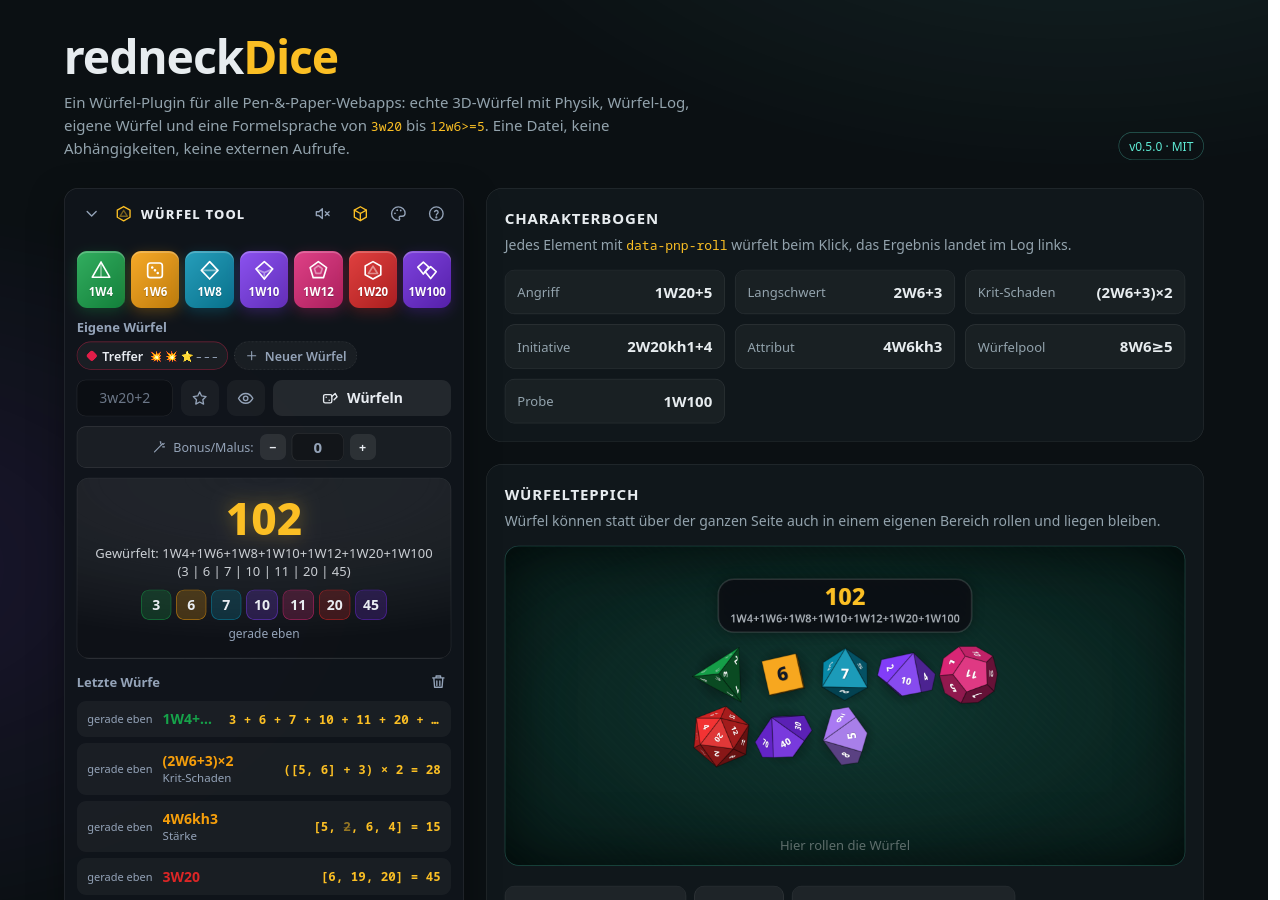
Dice plugin for tabletop RPG web tools: animated 3D dice, roll log, custom dice and hidden GM rolls – one file, no dependencies.
No tool found – reset the filters?
No account, no subscription: the character sheets and dashboards run right in your browser, your saves stay on your device, and you play together via a link. Only PenNodePaper runs locally on your computer. Here is what is actually inside each of them.
Need a new mouse? Pips & Paws rolls one up by the SRD: STR, DEX and WIL with 3d6 (keep the two highest), hit protection and pips, plus background, birthsign, coat and detail. Then sword, cheese and torch go into paws, body or pack by drag and drop, with usage dice and conditions as cards.
Dice are real tumbling 3D cubes. When a blow hits STR, the damage chain runs on its own: save, injured, incapacitated. The app only tells you; it never locks anything. Rests and level-ups follow the book as well.
At the other end of the table, the GM opens a room and sends a link. Every sheet lands live on their dashboard, along with a battlemap with fog, handouts, random tables, factions and time and light counters for the torch. Game data goes straight from browser to browser.
Little detail More than one mouse per browser? Every mouse you have played sits in a roster to switch back to, and you can hire hirelings straight from the catalogue.
Cairn characters are made fast and happily die faster, so the tool must not get in the way. Cairn Table walks you through all 20 backgrounds with fixed starting gear and d6 sub-tables, rolls 3d6 per attribute (swap two values if you like) and brings eight trait tables. Custom backgrounds can be imported as a .json file.
The rest is rules craft: ten inventory slots (four worn, six in the pack), saves with “1 always passes, 20 always fails”, a damage chain from armor through hit protection and STR to a scar, spellbooks that cost Fatigue and downtime goals between adventures.
The Warden gets a dashboard that thinks along: a combat tracker with the 2nd edition bestiary (84 creatures) and morale rolls, dungeon turns and travel with weather, a map with fog of war, a table center as loot pile and containers for the mule and the cart. Secret notes per player stay local on your device.
Little detail Making camp costs one Ration per character. No Ration, no sleep, and the app counts that for you.
Dungeonslayers is free, lean and German, but digital helpers have been scarce. Slayer-Arsenal walks you through character creation in seven steps as in the rulebook: race, class, attributes, traits, bonuses, gear, finishing touches. Point budgets are strict, so you can only continue once everything is spent exactly.
After that the sheet does the math. Life, defense, initiative, movement, melee, ranged and spell values come from attributes and gear, with warnings for rule breaks (a dwarf with a two-hander, a mage in chain mail) and calculated penalties for armor outside your class. 129 spells and 125 talents are built in, filtered to what your class may learn at your level, including maximum ranks.
Level-ups, rests and spell cooldowns are covered. For the game master there are a bestiary, combat tracker, battlemap and live multiplayer, all in one browser tab, no account.
Little detail Not sure what a box does? There is a “?” next to every heading, and an example character is one click away.
How to be a Hero thrives on starting in two minutes. HeroHQ handles the rest: the sheet does the math in the background, rolls checks with animated dice and knows your point budget (400 by default). If someone spends more, the GM dashboard flashes red. Thirteen themes make the sheet look the way you like.
The GM hosts with one click and shares a four-digit code. Then they see hit points, skills, inventory and status of every player live. On top comes what tables really need: private whispers (“the innkeeper is lying”), hidden loot in the table center, edits to characters without a log entry for curses and poison, and a soundboard with 43 sounds and ambient tracks that play in sync for everyone.
EldaraHQ is the spin-off for the Eldara pirate campaign and its house rules, with its own random generator for NPCs, places, magic items and rumours and a gallery of pirate portraits for NPC tokens.
Little detail Sounds do not stop automatically. Let rain loop forever and fire off the gunfight in the middle of the storm.
A gunslinger, a martial artist, a rainy neon alley. KINETIK is a tabletop rulebook for cinematic action. Every check is 2d6 plus attribute plus Mastery, and Mastery comes from Titles such as Ex-Hitman or BJJ Student, but only if the Title covers the action.
In combat both sides roll, and the difference decides between Dominance, Exchange and Counter. There are no hit points: hits cost Protection first, then Willpower, and only hard hits injure the body.
The web app is a whole game table: a character sheet with Title matrix and body silhouette, a Clash calculator and secret GM rolls, a map with grid, tokens, fog and measuring, combat tools including Bullet Time and music everyone hears in sync. It works offline, on phone and desktop, in ten looks from Neo-Noir to Manga to 8-Bit.
Little detail You build Moves yourself from a fixed grid of effect points. The Move builder calculates cost and minimum level live, even without a character.
Prep is rarely a straight line. PenNodePaper puts it on an infinite canvas: scenes, NPCs, places, clues and items are nodes with connections. Whatever has no fixed place yet, like the tavern the group may or may not visit, waits in the pool at the side. Zoom out and cards shrink to colour and title, so large campaigns stay readable.
Everything works by hand. If you want, add an AI co-GM: Claude or agy work on the campaign through MCP, you watch every change happen, and each request is one undo step. The AI looks things up in your rulebooks and world books instead of guessing. Images and maps optionally come from your local ComfyUI.
The campaign lives as markdown and JSON on your disk, with backups, branching and optional git. A bridge pushes handouts, scenes and NPCs live into KINETIK VTT, Pips & Paws, EldaraHQ or HeroHQ, or you print the GM binder as an A4 PDF. The project is in early development and runs locally (Node 20+).
Little detail Trying it needs no setup: the welcome tour starts with a practice campaign and a scripted stand-in for the AI.
Rolling should look like rolling. redneckDice throws d4, d6, d8, d10, d12, d20 and d100 as real 3D dice with physics and shadows, optionally with synthesized dice sounds. Five looks ship with it (classic, gemstone, metal, ivory and neon), and you can define your own. In the formula field a roll like 4d6kh3 or 8d6>=5 is enough: keep and drop, advantage, exploding dice, rerolls, success pools, Fudge dice and bracketed maths are built in.
A die that has already landed can be rerolled on its own while the others stay put. The GM can roll in secret: everyone else sees question-mark dice, and no value leaves the GM's machine until they reveal the result. Custom dice carry symbols or values, for example 3d{Hit}, or freely named faces like 1d[Heads,Tails].
The plugin is a single file without dependencies (about 43 kB gzip) and makes no network requests. One script tag is enough to drop it into a character sheet, a GM dashboard or a virtual tabletop. A roll fits into under 100 bytes and replays on other players' screens with the same values and the same animation. Results come from crypto.getRandomValues without modulo bias; the animation only shows the outcome. This page is the demo, and the source code is on GitHub under the MIT licence.
Little detail Low-motion works too: the plugin respects prefers-reduced-motion, can be used by keyboard and announces results to screen readers. The interface comes in German and English.
System names belong to their respective rights holders. Mausritter, Cairn, Dungeonslayers and How to be a Hero have their own publishers and authors – the tools here are independent fan-made tools and are not affiliated with them.